

Bedside Cosleeper
A bedside cosleeper attaches to your adult bed. If you stick to the CSPC guidelines for sleeping areas for infants It's safe.
These guidelines are similar to the crib bedding standards. Read more about the guidelines here. When selecting a bedside sleeping device safety, comfort, and convenience are the main aspects to take into consideration.
Safety
Many new parents and expectant mothers have embraced cosleeping, also known as bed-sharing, in accordance with the American Academy of Pediatrics recommendation that infants should sleep in the same bedroom as their parents. The Academy recommends that room-sharing with a baby is more secure than sleeping in the same bed with parents because it lowers the risk of Sudden Unexpected Infant Death (SIDS). The AAP doesn't recommend bed sharing but it does recommend that co-sleeping on an individual sleeping surface is a good option to decrease the risk of SIDS. This is the reason why the creation of the bedside cosleeper was so important to many families.
A bedside sleeper is attached to a bed frame that is suitable for adults. It is similar to a crib sleeper. The bedside cosleeper allows parents to easily monitor their child and allows them the ability to move around in an adult bed while keeping their baby close to them. The most reliable cosleepers meet strict safety standards and are made using durable, high-quality materials. To ensure your child's safety be sure to look for the Juvenile Products Manufacturers Association stamp of approval. This confirms rigorous testing and quality control.
The safety of a crib is dependent on several factors. This includes how it's installed and secured onto the mattress of the parent. If the bedside sleeper is not connected to the parent's bed in a manner that eliminates the gaps and openings where an infant can become trapped, it could pose an hazard of suffocation. It is vital that the attachment system for the bedside sleeper be tested in order to ensure that it is able to withstand any forces that are imposed during use, for example the parent bouncing on and off the sleeper. The attachment system or the corners on the bedside cosleeper must be exposed to an upward force.
The voluntary standard for bedside beds incorporates by reference to the federal consumer safety standard for bassinets and cradles (16 CFR part 1218), which includes requirements for performance for enclosed openings made of fabric. large bedside crib of the standard also address neck and head dangers of entrapment by insisting that following the application and release of 50 lbs. The standard also stipulates that after the release and application of 50-lb. cannot be created. ASTM's electronic Reading Room offers read-only versions of the standard.
Convenience
Many parents avoid cosleeping because they are afraid of suffocation or SIDS or because it's a "Ferberization", which forces children to sleep on their own. However, anthropologists have observed for a long time that many mammals, primates and people from non-Western cultures cosleep frequently. It could be because infants are calmed by the familiar voice of their mother and it also helps them learn to self-soothe.
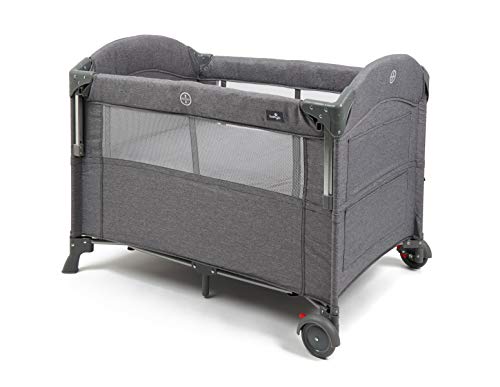
The top bedside sleepers have a clever design that attaches to the sides of any mattress and swivels so you can easily access it for diaper changes or feedings during the middle of the night. Choose a model that has adjustable feet that retract to accommodate various mattress sizes. It should also have an ample storage area to store all the baby's necessities.
Choose a bedside sleeper that is compatible with the standard crib bedding, so that it's safe to use as your child grows. Think about a model that's convertible and can be used as a play yard or a bassinet that is deeper. It can last for many years.
Portability
Based on the size of your bedroom, a bedside sleeper with wheels and/or a light base may be easier to move around the house than one with an imposing wood frame or substantial base. The Babybay Bedside Sleeper, HALO BassiNest Essentia and Snoo Smart Sleeper all have excellent portability features. Adjustable feet retract to accommodate platforms and the legs fold inward to give the most comfortable closeness to the mattress; and sides made of 100% mesh to let airflow without fabric covering the baby's mouth or nose.
The Arm's Reach ClearVue is an excellent option. It adjusts in 1" increments and can be used as a bassinet, or a portable bed. It also rotates, allowing easy access to your baby so that you can soothe, nurse or check on her throughout the night.